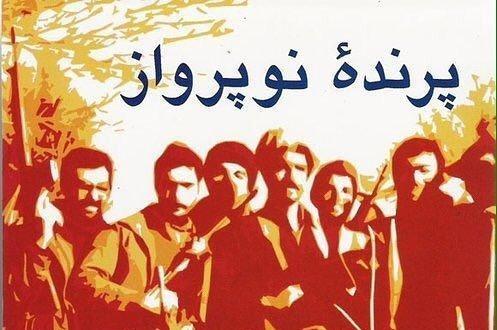
Sarbedaran fighters 1981-82.
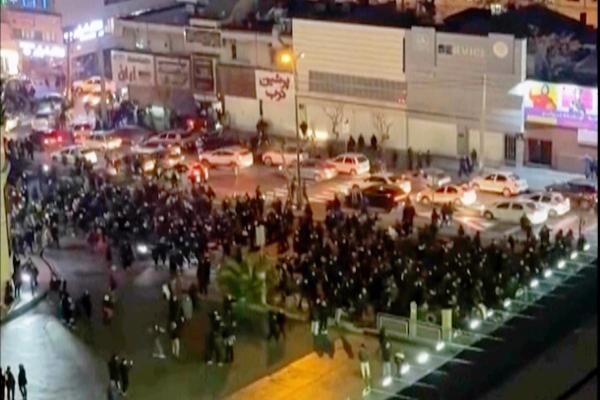
The roar of anger accumulated during forty-seven years of suffering, oppression, poverty, and repression swept across Iran recently, and was soaked in blood by [Ayatollah] Khamenei’s orders.
In an unequal and furious battle, countless people shouted for life and liberation up in the faces of the oppressors. The children of this country came to the streets for survival and for an honorable and decent life, pledging their passionate lives as collateral for this liberation. Today, on the occasion of the 44th anniversary of the Sarbedaran Uprising,1 with respect and pride, we honor the names and path forged by those who stood firm and did not surrender.
Forty-four years ago, like today, the revolutionary overthrow of the Islamic Republic was an urgent, felt need for the majority of society in Iran. The Sarbedaran Uprising arose in response to this urgent need, but could not bring the revolution to fruition. Revolution is still on the agenda—a revolution that completely uproots the Islamic Republic regime, and builds a fundamentally different political, economic, and social order that meets the immediate and long-term interests of our oppressed and exploited people; a revolution that will get rid of these criminals and their entire economic, bureaucratic, and military apparatus; a revolution that, by relying on the wisdom, passion, power, and participation of all the people, will sweep away poverty and oppression; a revolution that will not allow the daily lives and the fruits of the labor of millions of people and the resources of this land to be monopolized and controlled by a minority of Islamic and non-Islamic mega-capitalists and their imperialist masters, while everything continues as before. No! We will not allow this.
The uprising in the city of Amol on January 26, 1982 was the high point of the armed struggle to overthrow the Islamic Republic that was initiated by the Union of Iranian Communists in 1981. The book The Bird That Was Learning to Fly is a relatively comprehensive account of the Sarbedaran January uprising and provides a preliminary summary of that revolutionary battle. It should be read by every fighter.
Although that struggle failed to achieve its goal, its lessons still apply. The framework, purpose, and goal of commemorating the Sarbedaran Uprising and the discussion around it is always about the “revolution”—what a revolution is, what problem is it out to solve, and for whom? The vital importance of these questions concerns and connects the fate of the oppressed and exploited masses [in Iran], from Zahedan to Mahabad, to the countries of this region, from Pakistan to Yemen and Turkey, and the whole world, from the U.S. to China… and ultimately all of humanity.
These are questions that can only be answered with the scientific theory of this revolution, the new communism [developed by revolutionary leader Bob Avakian]. For this reason, the key to carrying out the revolution is to understand and apply this science. In fact, “how to lead the revolution” is built upon, and developed through, understanding and applying this science while carrying out the revolution. The main application of this theory is to identify obstacles to achieving this revolution, and to find ways to overcome them.
This method and approach works on varying levels of complexity. The “Manifesto and Program of the Communist Revolution in Iran,” the “Draft Constitution of the New Socialist Republic of Iran” and the “Strategy of the Path to the Iranian Revolution” lay out this understanding at a basic level, and the important policies of the struggle that must be developed at every juncture.
What must be done is clear to us: we must turn this theory and its specific application for the revolution in Iran into a powerful force and pave the way for this revolution to break through a multitude of intellectual, political, ideological and practical obstacles, including “security-military” obstacles and repression by the state. These are some key problems we must anticipate and challenges we need to deal with: 1) the regime’s fascist repression; 2) the bourgeois forces outside the government that the capitalist-imperialist powers are backing to become future “leaders” and “alternatives”; 3) outmoded ideas and anti-scientific ways of thinking among the people themselves in their millions, who should constitute the ranks of the revolution; 4) intellectuals, especially students, who are part of the petite bourgeois class, there are no significant sections or even a fraction of them that has yet been able to step outside of the intellectual framework produced by the [capitalist-imperialist] system itself; they must become able to stand up against the theories that have been fabricated to oppose communist revolution.
To pave the way for a real revolution, these obstacles must be addressed and overcome. Thousands of people must be organized as strategic commanders of that revolution, must spread an understanding of this strategy for real revolution among millions of people so that each individual, with full understanding of the goal, purpose, and plan of the revolution, can contribute their share.
After the defeat of the Sarbedaran Uprising, many former fighters became disillusioned and confused and left the ranks of the revolution. A few years [before that uprising], revolutionary communists had to confront the fact that there had been a revisionist coup in China in 1976 and that capitalism had been restored. They were still struggling to understand the immensity of that defeat and its catastrophic consequences for communist revolutions in all parts of the world. In fact, the restoration of capitalism in China, which marked the end of the first wave of communist revolutions, was the decisive factor that triggered the tsunami of departures from the ranks of the communist revolution. The vast majority of revolutionaries were unable to scientifically confront the reality of the defeat and that it marked the end of the first wave of communist revolutions in the world, or understand its causes and consequences; or to consider the possibility and necessity of turning that experience—and even that defeat—into the basis for retaking the initiative against the existing order and beginning a new wave of communist revolutions.
We are now at another historical juncture with, objectively, very important opportunities open to us. The greatest weapon we have today that we did not have back then is the new communism developed by Bob Avakian. Today, we few revolutionary communists, with the new communism in our hands—which is in fact the telescope and microscope of the revolution, focused and further developed—have the possibility to seize the great opportunities that the crisis in the entire world capitalist system provides for a real revolution, and with far fewer mistakes. We should attract an increasing number of people to this revolution, and the new people who join this revolution, regardless of their backgrounds, strengths and weaknesses, or what social strata they come from, are responsible for attracting more people to the revolution—especially from among the most impoverished strata of society—as initiators and frontline fighters of the revolution.
There are no guarantees, no foreordained outcome to this struggle, but humanity, especially the billions of people who are oppressed and exploited—from Iran to the U.S., and in every corner of the world—need to overthrow this system. Given the underlying contradictions of this system, there is a very strong basis for overthrowing it. But if we do not have a vanguard, then there will be no force to act on this opportunity, and the result will be another historic disappointment, bringing despair and frustration.
It is necessary to be a serious and disciplined revolutionary vanguard; to actively grapple with the “key questions” of the revolution—and on this basis and within this framework, to address the urgent issues confronting us: on the one hand, to work on a daily basis for the transformation of society in a revolutionary direction, and on the other hand, to devise a strategy so that we can connect today's activities to that strategy (both the political goal and the strategy for the violent overthrow of the ruling state).
Amidst the serious turmoil that is engulfing not only Iran and the Middle East but the world, we need to very quickly get to a point where this kind of culture is embraced by the many that feel the gravity of the situation and are eagerly seeking a real path for changing the world. The ranks of such a revolution must grow each and every day.
Today, getting deeply immersed in the new communism is an important part of preparing for revolution. In this context, Avakian emphasizes,
…popularizing the strategy for revolution is a key part of carrying out that strategy. If we are supposedly carrying out a strategy yet we ourselves don't understand very well what it is—and don't talk about it with the masses—what kind of strategy is that and what is it really a strategy for? On the positive side, let me emphasize it again: popularizing the strategy for revolution—in the correct way, in a meaningful and living way—is a key part of carrying out that strategy. When we do popularize this strategy, and growing numbers of people engage with that strategy, then that itself becomes part of the objective terrain too. It influences how people think, particularly about the possibility of revolution and the strategic conception for making revolution. The more that people understand that work has been done on the problems of really making revolution, the more they engage with the strategic conception that is being developed for how to make revolution and how the work that's being carried out actually proceeds—which it must—in accordance with, and as a way of implementing, that strategic conception, the more this is going to come alive for them.2
The message of the Sarbedarans is this: To end the one-sided war being waged by Islamic Republic, or any similar regime that may replace these fascists, the people need their own revolutionary army. The people will fight against their conditions of oppression and exploitation; they will sacrifice their lives, multiplying and spreading courage. The point is that all of this must find a political focal point, with a clear program and a strategy for realizing that program, so that we can turn repeated historic defeats into victories—the victories for the “New Socialist Republic [of Iran]”—because, this is the only alternative that can truly free our society from the grip of centuries of oppression and exploitation in both old and new forms, and inspire humanity in every corner of the world.
Communist Party of Iran (Marxist-Leninist-Maoist)