Introduction
Fifty years ago, on September 9, 1976, Mao Zedong died. Mao led the monumental and tremendously liberating Chinese Revolution of 1949-1976. This revolution was a breakthrough for oppressed humanity and all who yearn for a better world. But shortly after Mao’s death, new bourgeois forces in China carried out a violent coup—and began the process of restoring capitalism. Despite continuing to claim to be socialist, today China is in fact a major capitalist-imperialist power and the main rival to U.S. imperialism.
The defeat of socialism in China in 1976 marked the end of the first stage of communist revolution—beginning with the short-lived Paris Commune of 1871... the Russian Revolution of 1917-56... and the Chinese Revolution. The Russian and Chinese revolutions were the first and historic attempts in modern history to create societies free from exploitation and oppression. Incredible, transformative changes took place in extremely difficult circumstances. There were also serious shortcomings and problems, including some grievous errors.
Mao Zedong’s greatest contribution was the theory and practice of continuing the revolution under socialism and preventing the restoration of capitalism. This took expression in the Cultural Revolution of 1966-76. Contrary to the vicious lies and slanders directed against it, the Cultural Revolution was in fact an unprecedented and far-reaching struggle led by Mao and his followers to revolutionize thinking and restructure society away from all exploitation and oppression. And to do so based on the conscious involvement and initiative of tens and hundreds of millions of people.
Following the defeat of socialism in China—in the face of confusion and disorientation among communists worldwide and unremitting anticommunism—Bob Avakian set out to sum up the first stage of communist revolution. This involved deeply learning from and defending this precious experience—while at the same time identifying significant problems in method and approach in how these revolutions were led, as well as particular policies and orientation.
Through decades of theoretical work and struggle, Bob Avakian has synthesized the new communism. He has drawn from diverse spheres of human understanding and endeavor—the arts, sciences, philosophy, and wider history. He has analyzed big changes in the world. The new communism builds on the achievements of the first stage of communist revolution but is a qualitative leap beyond and also, in important ways, a break with communist theory as it has been previously developed.
At the heart of the new communism is a thoroughly and consistently scientific approach to reality.
Humanity now has a radically different and far better framework to guide a new stage of communist revolution. To make an all-the-way emancipating revolution that can actually lead to overcoming all exploitation, social oppression, and corresponding ways of thinking. To create a world in which human beings can truly flourish. That is why being a communist today means being a follower of Bob Avakian.
In marking 50 years since Mao’s death, we are posting an excerpt from Bob Avakian’s recent work, Humanity on the Brink..., that provides critical understanding of the Chinese revolution and Mao’s leadership. We are also reposting a 2005 interview with BA digging into this experience, and providing a brief historical timeline.
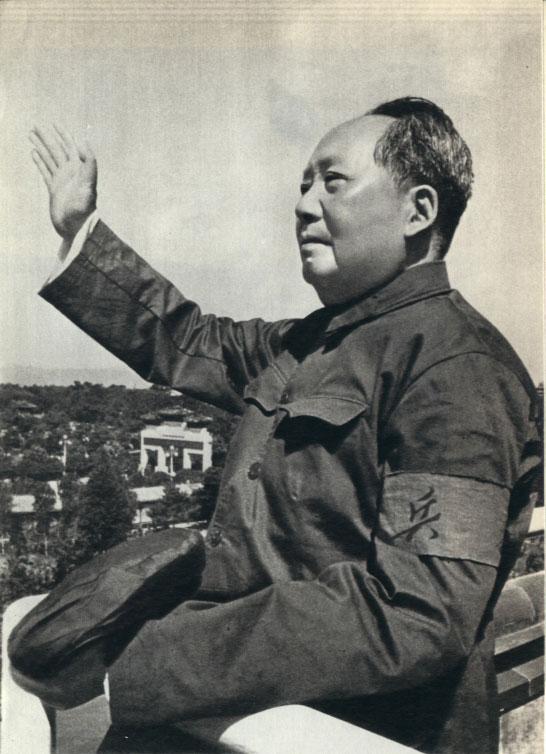
Mao Zedong in Tianamen Square reviewing the Red Guard youth at the start of the Great Proletarian Cultural Revolution, October 18, 1966. Public Domain
Contents
Introduction
An excerpt from HUMANITY ON THE BRINK: A Forced March Into the Abyss, or Forging a Way Forward Out of the Madness? by Bob Avakian
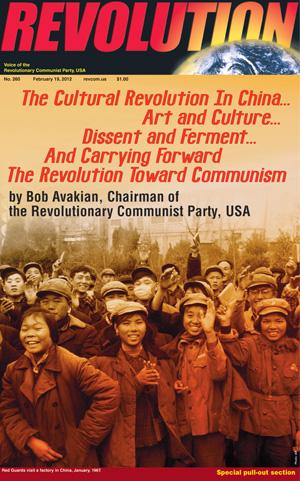
The Cultural Revolution in China... Art and Culture... Dissent and Ferment... and Carrying Forward the Revolution Toward Communism, by Bob Avakian
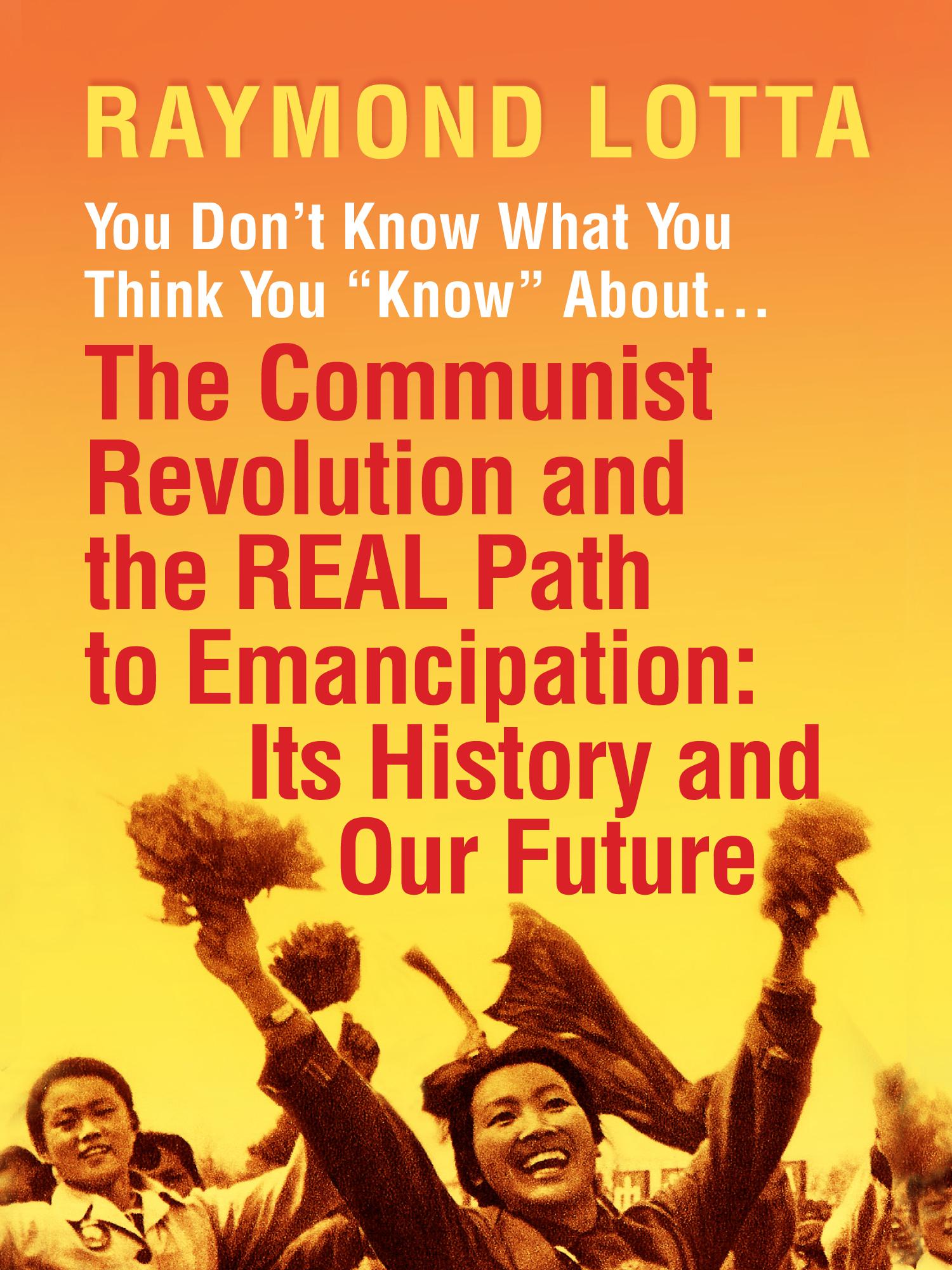
You Don’t Know What You Think You “Know” About... The Communist Revolution and the REAL Path to Emancipation: Its History and Our Future, an interview with Raymond Lotta
A Timeline of Key Events in Mao Zedong’s Life and the Revolution He Led
* * *
Bob Avakian on Mao and the Chinese Revolution, excerpt from Humanity On the Brink: A Forced March Into the Abyss, or Forging a Way Forward Out of the Madness?
So let’s look next at China. We hear so much slander of Mao and the Chinese Revolution and the Cultural Revolution in particular—once again, conscious, or at least ignorant, idiocy. What, after all, were the objectives of Mao and the Chinese communists in waging the revolution? What was the situation of the masses of people in China that established the necessity for a revolution and made masses of people supportive of the revolution? The terrible conditions in the countryside, where people regularly starved in the millions; where families had to sell their children, and in particular their young girls, to landlords and others to be exploited and sexually plundered, just in order to try to have a meager existence for the rest of the family; where there were terrible diseases and epidemics that regularly struck China, owing to the backward conditions of the country.
There was the situation in the cities where masses of people were working as exploited proletarians—where the situation of the exploited workers, the proletarians in the factories, was one of desperate conditions as well. Even attempts at trade union organizing by these workers were met with vicious, murderous repression by the ruling regime backed up by the imperialists, the ruling regime headed then by Chiang Kai-shek.
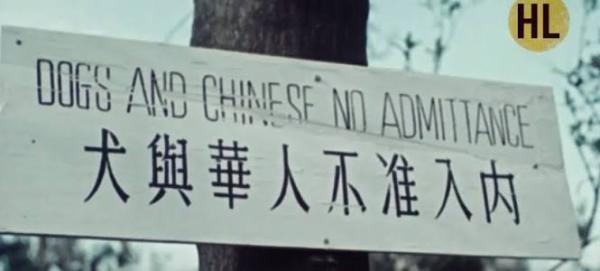
A sign in a major park in Shanghai before the Chinese Revolution took power. Photo: PD
This was in the context of the overall domination of China by imperialism, with all of its different effects, including in the cultural realm, where Mao made the striking statement one time that this imperialist domination and the subordination of the Chinese people was so extreme that it could be said that if a foreigner farted in China, there was always some Chinese who could be found to say that it smelled good. But in a more serious expression of this—emblematic of the larger situation, a concentration of it—was the fact that there was a sign in a major park in Shanghai: “No Dogs or Chinese Allowed.” In a major city of China.
This is what the revolution was aimed at overcoming—and did, in really marvelous ways, overcome—eliminating scourges like drug addiction on a massive scale, diseases and epidemics that had plagued the country for decades and centuries. You can read the Pearl Buck novels about China and see some of the conditions I’m talking about.
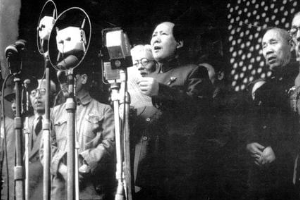
Mao Zedong proclaiming the establishment of the People’s Republic of China, October 1, 1949.
Tremendous advances were made in developing the economy. It’s always talked about how many people Mao supposedly killed—and contests to up the numbers from so many millions, to so many times that millions, to so many times that. But think about all the lives that were saved during the period of socialism led by the Chinese Communist Party and Mao. To cite one very meaningful statistic: At the time the revolution came to power in 1949, the average life expectancy was 32 years; and at the time of Mao’s death, less than three decades later, it had risen to 65. The infant mortality rate at that time in the city of Shanghai—remember Shanghai? “No Dogs or Chinese Allowed”—the infant mortality rate in Shanghai at that time was lower than it was in New York City.
So this is expressive of some of the major gains that were made, including the emancipation of women. The elimination of foot binding, where the feet of a woman were forcibly turned under, causing them to have to wobble when walking, making them supposedly more desirable to men. This practice was eliminated.
All these things were eliminated, not by state repression, but by mobilizing the masses of people, including the mass campaigns against disease, against drug addiction, against prostitution, where the people were not victimized and persecuted who had been caught up in this, but there was education and struggle carried out and they were given a new lease on life in a real sense to become productive members of society. Tremendous gains were made—and it’s just disgusting the slander against this and the ignorance that is promoted.
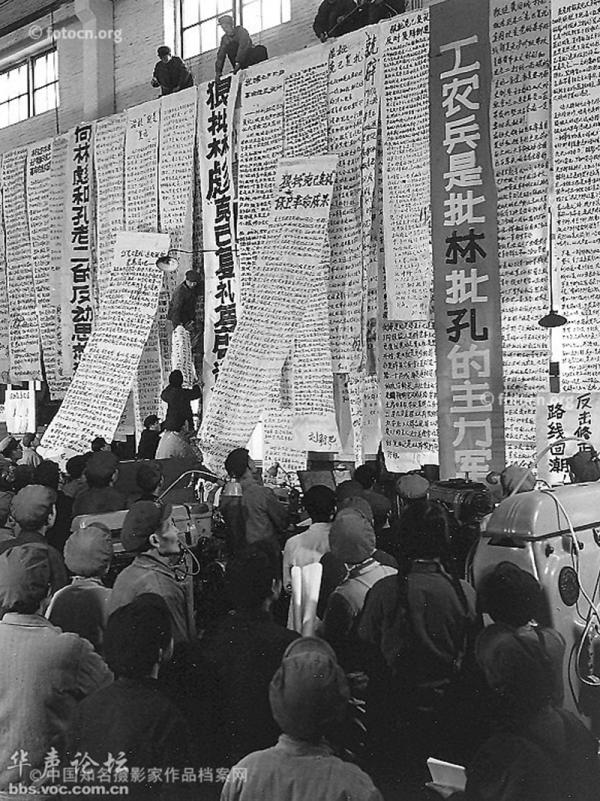
Big character posters on factory wall in China provided the masses a new form of revolutionary struggle under socialism to prevent the restoration of capitalism.
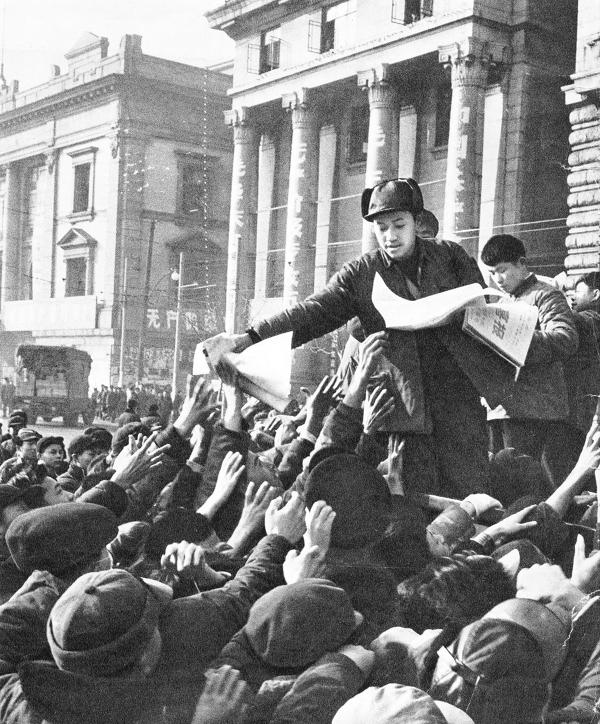
In Shanghai, the revolutionary workers, with Maoist leadership, were able to unite broad sections of the city’s population. This was called the January Storm.
Similarly about the Cultural Revolution. You could have a lot of fun in a certain sense by asking all these people who spread all this garbage about China and Mao: What was the actual aim of the Cultural Revolution? What policy did Mao foster and further during the course of the Cultural Revolution? What was the actual course of the Cultural Revolution? “Blu, blu blub, blub, bluh...” That’s the content and substance of the answer you would get from all these people crudely slandering China—the revolution and in particular the Cultural Revolution. The Cultural Revolution was a mass uprising—yes, led by Mao and elements in the Chinese Communist Party who were on the revolutionary road. But it involved a swirl of debate and struggle, overwhelmingly not violent; and when there was violence, this was opposed by Mao and directives were issued to counter it and steps taken to prevent it and to bring things back to the course of mass debate. And, yes, there were some excesses. There has never been a truly mass upheaval in the world that has not involved some excesses. But it’s not as if Mao were fanning and encouraging the excesses. He was moving to direct people away from them and to get things back on the course that they needed to be on.
In the major cities hundreds, literally hundreds, of mass newspapers were produced by the masses of people rising up and debating the questions of socialism and what road forward for China, and so on. This was the essence of the Cultural Revolution.
And one of the real ironies of the Cultural Revolution—which, of course, all these idiots don’t know anything about or choose to ignore—is this: one important aspect of the Cultural Revolution is that it was an attempt by Mao to deal with the threat to socialism, to deal with the moves to overthrow socialism and restore capitalism, coming from within the Party and the state itself, to counter this and oppose it and defeat it by means other than the kind of massive purges carried out by Stalin in the Soviet Union. Mao had summed up that experience, and the mass struggle of the Cultural Revolution was Mao’s means to take on this problem of forces moving to restore capitalism and the question of transforming the people and their basic values, in a different way than state repression. That’s one of the great ironies of all the vicious attacks on the Cultural Revolution.
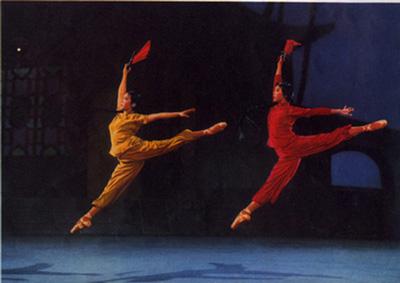
During the Cultural Revolution, new revolutionary culture was created—with ballets and operas that told stories of bringing a new world into being, of people awakened to struggle for liberation.
During the course of the Cultural Revolution, another great achievement was the creation of revolutionary art and culture, really for the first time in history, on this scale and with the actual backing of a government, with one of its outstanding features women playing a prominent role as revolutionaries, not as playthings for men.
So this was a real struggle which had come to a head in China over which road to take—the road of socialism or the road of capitalism—and, as I said, there were powerful forces within the Chinese Communist Party who were determined to take the country on the road of capitalism, whose involvement even in the Communist Party was always more—was never so much, I should say—actually wanting to advance society on the road of socialism and ultimately the world toward communism, with the abolition of exploitation and oppression, but was really centered on making China a great powerful country.
And for a while, during certain stages of the communist revolution, those viewpoints could somewhat coexist within the leadership of the revolution; but then, once the foreign yoke had been thrown off and the question of, yes, how do you develop the economy and develop the country as a whole came to the fore, those viewpoints increasingly came in conflict with each other. There were those who said, like Deng Xiaoping: “What does it matter whether it’s a black cat or a white cat as long as it catches mice?”—meaning: who cares whether we use capitalist methods or socialist methods, capitalist methods are fine as long as this develops the economy.
Another one of the ironies here is that a slander of Mao commonly repeated by so-called scholars of totalitarianism and authoritarianism, and so on, is that Mao “invented” this danger of capitalist restoration in order to purge a whole bunch of people and carry out repression, so as to further assert himself as the unquestioned leader.
Well here are the facts: Mao said there are forces in the Chinese Communist Party who are moving to restore capitalism, that’s why we need a cultural revolution to defeat them as well as to further transform things on the revolutionary road, including the thinking of the people. The political objective was to defeat this move on the part of powerful forces inside the party and the state to restore capitalism. Supposedly Mao “invented” this danger so he could be an even more powerful tyrant. Well the simple fact is this: what these people have done, beginning with Deng Xiaoping after the death of Mao, is exactly what Mao said they were going to do—exactly moving to restore capitalism in China. And here we see that, once again, what was really at stake was two different roads. Not as an abstraction but how—by what means, on what road—do you, for example, develop the economy, as was recognized generally as a very important goal of the revolution: to develop the economy, to lift the country out of the remaining poverty for masses of people.
Here I can tell a little story. When I visited China in 1971 we went to a dinner, the delegation I was part of, we went to a dinner in Shanghai. And one of the leading people there in Shanghai hosted this dinner for us. Well, prior to this dinner he had regaled us for nearly an hour with statistics about how they were developing the economy in Shanghai and contributing to the overall development of the economy in China. This was not some sort of soulless bureaucrat. During the course of the dinner, for example, the same guy—we had some crab for dinner, and the same guy at one point proclaimed humorously, “The person who invented crabs is a genius!” Now this is not your typical dogmatic communist, or your faceless bureaucratic official. But the reason that we were given such a rundown on the development of the economy was because of all the slanders that the people—Mao and others— who wanted to stay on the revolutionary road, and Shanghai was then a stronghold of that, supposedly they didn’t care about developing the economy; they just wanted to wage “class struggle” and persecute people, and so on and so forth.
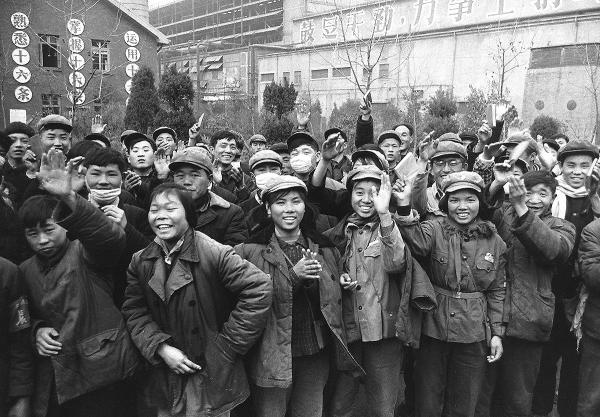
In revolutionary China, Red Guards take the Red Book of Mao's quotations to a factory, January 1967. Photo: AP
So what was at stake was not whether or not to develop the economy, it was on what road. And toward what end? Do you develop the economy on the basis of re-establishing and restoring capitalism and its principles of development—which means basically exploiting people within your country and ultimately internationally? Or do you do it on the basis of moving to overcome exploitation and the profound differences that accompany exploitation—such as the difference between the countryside and the city, where the city tends to dominate the countryside, be more privileged if you will, and the difference between the people living in the two places; the difference between mental and manual labor, between people who work mainly in the realm of ideas and those who work with their backs, mainly. Do you do it in a way that’s moving to overcome these great differences, as well as the differences in income and so on, that are part of that whole picture? Or do you do it by just unleashing all those differences fully?—which is the path China has taken after the death of Mao and with the restoration of capitalism beginning in late 1976.
A lot of talk is made—here’s an irony—all these people who say “socialism has never worked, communism has never worked”: they’ll acknowledge, on the other hand, that China has lifted hundreds of millions of people out of poverty; and that’s under a system that these idiots call “communism,” even though it’s not—even though the Chinese Communist Party continues to be the ruling party, it has long since abandoned any objectives of continuing to transform society and the world toward communism. So here is the big irony on the part of people who say, “communism and socialism have never worked”: this Communist Party-led country in China has lifted hundreds of millions of people out of poverty.
Another kind of irony here is that, even though the ruling class in power in China, since shortly after the death of Mao in 1976, is capitalist, and definitely not “communist,” the foundation on which they have carried out capitalist development was actually built through the development of the economy on a socialist basis, during the period of Mao’s leadership. Without that, China would have remained a backward, deeply impoverished country. At the same time, the restoration of capitalism in China has been accompanied by the re-emergence of profound inequalities and terrible social ills, such as prostitution; and accompanying all this, in the realm of ideology and culture, the slogan “to get rich is glorious” has been promoted in place of the principle popularized in socialist China, with Mao’s leadership: “serve the people.”
Now, let’s speak to this. If the path that Mao charted, the revolutionary path, had been continued, would that have meant that people would not have been lifted out of poverty? Perhaps it would have taken a little longer. But China’s economy was already rapidly developing—that’s reflected in what I cited about the life expectancy. That reflects the development of the economy, or else that could not have happened. And by the way, that was happening while the population was expanding not contracting. They didn’t kill off a bunch of poor people so the life expectancy would be statistically higher. The population was expanding while the life expectancy was doubling. So if they had continued on the road that Mao was fighting for, and those who were with him, they would have also lifted millions, hundreds of millions of people out of poverty—but on a different road. It wouldn’t have been a road of China being a great power exploiting people around the world, in Africa and other parts of the world, as it is doing under the rule of these phony communist— actual capitalist—rulers of China.
So, if you look at the actual experience which I’ve only been able to briefly sketch here—and people should look into it more fully in the works I’ve cited, including the interviews with Raymond Lotta and myself, and see what they were actually up against and what they actually achieved—you can see the complete, yes I’ll say it once again, idiocy, and deliberate fostering or, in any case consistent fostering, of ignorance, to deny people who are feeling the weight of living under this system and hungering for something better: to deny them the whole knowledge of this experience and therefore the understanding that there could be a real alternative.
At the same time, I’ve spoken to some shortcomings, and even some very serious errors in the overall experience of socialist society led by communists—and yes, I’ve used the word “grievous” in speaking of errors on the part of Stalin in particular, but also some significant problems with Mao’s leadership, some shortcomings in Mao’s orientation and approach. For example, through the Cultural Revolution there was recognition of the importance of ferment and debate, carried out as it was on a grand scale, through the Cultural Revolution (as I’ve briefly described here). But the scope of this was still too restricted. It was still too much on the terms of: If you want to get anywhere in this debate, it has to be conducted on the basis of upholding Mao’s leadership and you’re for the socialist road, while those who are opposing you are not. It wasn’t as open-ended and as broad-based a debate as it needed to be.
This was also reflected in the realm of art and culture, even with the very great breakthroughs and tremendous achievements that I briefly described. There was, again, a certain constriction of art and culture to revolutionary themes and not enough florescence and ironically not enough flowering of different tendencies in art, and for that matter, not enough support for art that wasn’t directly political—even while revolutionary art, art that’s directly promoting the revolution, including in the most artistic way, is very important. But there was a certain limitation there and a certain constricture in terms of what would get backing at least.
In the more philosophical dimension, if you will, there was a certain “reification” of the oppressed masses: the common view that had influence, was actually being promoted there, that the oppressed masses by the very nature of their position had, as the current parlance puts it, a particular purchase on the truth—or at least that they would be spontaneously more inclined toward striving for revolution. Now it’s true that where there’s oppression, there’s resistance—but that doesn’t spontaneously lead to people understanding where that resistance needs to go, how it needs to develop into revolution, what’s the character of that revolution and how to deal with the problems of the revolution. All that requires science—it doesn’t reside just in the oppressed masses by virtue of their oppressed condition.
So there was this tendency, which included the idea of “class truth”—as opposed to objective truth. The idea that for the proletariat and other oppressed people there was a truth that corresponded to their interests, and opposed to that a “truth” that corresponded to the interests of their exploiters and oppressors, so you had to go with the “proletarian truth” not the “bourgeois truth.” This is in opposition to the scientific understanding that truth does not have a class character. Truth can be wielded on behalf of a class, but truth itself does not have a class character—it has an objective character. Truth resides in, or represents, an accurate reflection and concentration of objective reality—not the subjective viewpoint of this or that class, whether bourgeois or proletarian.
At the same time, there was, on the part of Mao and that party generally, a sort of an eclectic mix of communism as the main guiding outlook and method, yet secondarily, but significantly, this was mixed in with a fair amount of nationalism. This is understandable, in a certain sense, given the whole oppressed history of China as a country, as a nation (Mao’s sharp comment, which I referred to, and the more brute example of the sign in the park in Shanghai, speak to that). Nevertheless, the outlook of communists has to be internationalist and not nationalist. Yes, you apply that to particular conditions, but the outlook and the overall approach has to be internationalist not nationalist, yet there was kind of an eclectic mix, including in Mao. This was also reflected in the realm of culture, where one of the guidelines that was promoted was “have foreign things serve China.” And this really went to a bad place with a rejection of some “foreign culture” that was actually quite positive, such as jazz and rock and roll in the U.S. then (the 1960s and early 1970s), which was criticized as essentially decadent by the dominant line in China at that time.
This negative nationalist tendency came out very dramatically when, in the early 1970s, with the leadership of Mao, China adopted a policy of the opening to the West—identifying the Soviet Union as the main enemy (a Soviet Union which, again, had since the mid 1950s, been a capitalist country and had developed into a powerful capitalist-imperialist country, but in the name of communism). The Soviet Union was posing a direct threat of invading and even using nuclear weapons against China in the1960s, particularly the late 1960s. In the face of that, in the early 1970s, Mao and the Chinese party adopted a policy of “opening to the West.” In other words, seeking certain relations and even a certain kind of alliance with the U.S. in particular, in order to deal particularly with the threat of the Soviet Union. But this led to all kinds of terrible policies and actions on the part of the Chinese government, including supporting people like Marcos in the Philippines, a brutal oppressor kept in power by U.S. imperialism for a long time. The irony was that there was actually a Maoist revolutionary force waging armed struggle against the Marcos regime in the Philippines—and yet the Chinese Party, as part of this opening to the West, was supporting the Marcos government.
There are many other examples of this. Some of it became rather—well, I’ll use the word, disgusting. I read some of the things that have been retrieved from discussions that Mao held with Henry Kissinger, representing the U.S. government, during this period of the opening to the West in the 1970s, and in these discussions it’s almost hard to distinguish Mao as a communist, to be blunt. So this was an extension of the view that you had to maneuver in this way to deal with the threat of the Soviet Union. The point is not to be dogmatic. It’s one thing if you make tactical alliances even with imperialists—if you don’t compromise fundamental principles. But, unfortunately, too much fundamental principle was compromised as part of this. I can’t go into this more fully here, but it’s a very important experience that needs to be seriously confronted and scientifically dealt with.
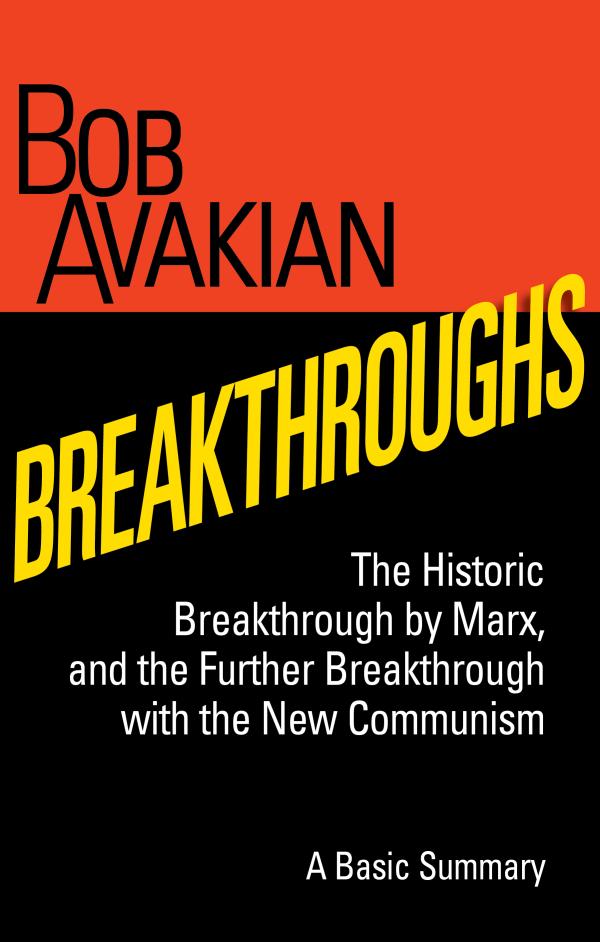
So, that’s some important discussion of the historical experience of communism, in particular socialist society led by communists, in the Soviet Union and China. In a real sense, the major work of mine, Breakthroughs: The Historic Breakthrough by Marx, and the Further Breakthrough with the New Communism, A Basic Summary provides a bridge from the historical experience of the communist movement to the further synthesis with the new communism. (Later in this presentation, I will come back to a discussion of some of the key elements of the new communism as a continuation of, but also a qualitative leap beyond, and in some important ways a break with, communist theory as it had been previously developed. And in a two-part interview with me in early 2025—available at revcom.us and thebobavakianinstitute.org—I discussed more fully the basic principles and methods of the new communism.)
But here it is important to come back to this essential point: Once the possibility of a really radical and truly emancipating alternative—a fundamentally different system and way to live, as represented by the communist revolution—once this is closed off, in reality and in people’s minds, all kinds of horrors will continue, and sooner or later those whose minds have been closed to this emancipating alternative will become complicit in, or at least accommodate to, those horrors, one way or another. This is expressed in particularly acute terms now, in the situation where this system is running up against its limits—something which I have spoken to here (and discussed more fully in other places, including my social media message #118.)
The Cultural Revolution in China... Art and Culture... Dissent and Ferment... and Carrying Forward the Revolution Toward Communism
by Bob Avakian
This is part of a 2004 interview that aired on Michael Slate’s Beneath the Surface show on KPFK radio in Los Angeles, on July 29, 2005. The interview appeared in the May 9, 2016 issue of Revolution newspaper.
Michael Slate: Let’s dig into the Cultural Revolution [in China, from the mid-1960s to the mid-1970s]. You led communists around the world in fighting to understand what the significance of the Cultural Revolution was, and to uphold it as a dividing line question, and to see it as the highest point of class struggle in human history, the greatest height the class struggle’s gotten to in human history. That’s not exactly—in terms of conventional wisdom today, that’s not exactly what you find on the bookstore shelf. You can find 70 books about how—and you can hear people who are 32 years old talking about how—the Cultural Revolution destroyed their careers, and they had remarkable careers when they were like two years old. But it’s had an impact on people. It’s had a big impact on people.
You had musicians who once were major supporters of the Cultural Revolution who now listen to these stories from people, from artists coming out of China, for instance, and saying, “I was misled. I didn’t understand everything that went on because I didn’t understand the suffering that people have.” Or you have these popular cultural forms, The Red Violin, for god’s sake: a movie that had nothing to do with China, but there was this one scene in it where they had to show the Red Guards banging down doors and pulling people out of their houses, searching for this red violin that they needed to smash. And it was this symbol of artistic freedom and creativity.
Or you had Farewell My Concubine, which was a big, big movie among—I know a lot of my friends, a lot of artists and intellectuals who went to see that film two, three times, and really looked at it as a sign of what was wrong, and how the Cultural Revolution was not an advance for humanity, but something that was actually part of suppression, and particularly suppression of intellectuals and artists.
I wanted to ask you about that—let’s talk a little about the question of intellectual freedom. And I think it’s tied up with the question of dissent, but we can get into that separately. But I think actually this idea of—what you’ve been saying all along, and one of the reasons I asked you about this question about the Party and everything else in terms of people starting to settle in, and that kind of thing—is that you had talked earlier about the need for really just a totally, tremendously creative surge among the people and in the Party and among communists, this constant creative application, and then that Marxism itself is a science that actually, in a living form, really does do that. When you were saying that, I was just thinking, you know, it’s so refreshing to hear this thing because it invigorates you with a sense of like, you know, [what] our science really is—it unleashes the greatest creativity, when you grasp it, it unleashes the greatest creativity possible.
But there’s this common, or this conventional wisdom that actually—here’s this crucial development in the class struggle, this crucial development of the science of Marxism-Leninism-Maoism, and yet it’s portrayed as this sort of thing that was the suppression of artistic and intellectual freedom.
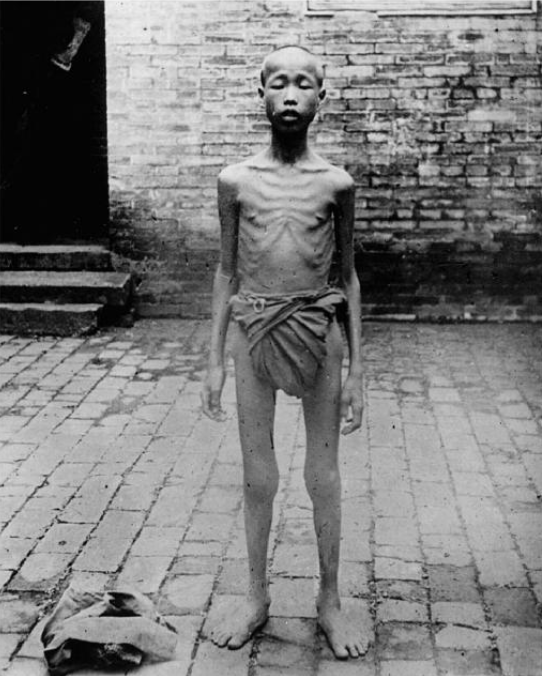
Famine victim in China became a beggar on the street, circa 1907. Public Domain
Bob Avakian: Well, once again, I hate to sound like a broken record, but this is a complex question and a complex problem that the Cultural Revolution was seeking to address, and was addressing. And once more you have to situate this in what was occurring in the development of the Chinese Revolution, and not come at it from the way all too many people do in this society. They don’t understand the actual dynamics—why these revolutions were necessary in the first place, what they arose out of, and what were the contradictions they faced when they emerged. And some people have some sense of, OK in China people were poor. If you have read those Pearl Buck novels, you know, people of our generation, where you get a sense about the terrible life of the peasants, and you can understand why people would want to cast off that oppression, and so on. But a lot of people are even ignorant of that, especially now. They have no real sense of what China was like, and why a revolution was needed, and how that revolution had to take place.
So that’s one problem. But not only did they have to overcome the whole daunting prospect, or reality rather, of imperialist domination and carving up China, but they also had a whole history of feudalism, of massive exploitation of the peasantry and hundreds of years—or thousands of years, actually—in which the great majority of people were just desperately impoverished and exploited. And they were coming from a society which, because it was dominated by imperialism, and because of the remaining feudalism, was not advanced technologically, or was technologically advanced [only] in a few enclaves. But then the vast part of the country and the people who lived in it were mired in a lot of enforced backwardness. Read full text...
You Don’t Know What You Think You “Know” About...
The Communist Revolution and the REAL Path to Emancipation: Its History and Our Future
Chapter 1. Introduction
Chapter 2. The First Dawn—The Paris Commune
Chapter 3. 1917—The Revolution Breaks Through in Russia
Chapter 4. China—One Quarter of Humanity Scaling New Heights of Emancipation
Chapter 5. Toward a New Stage of Communist Revolution
Appendix, Notes on Epistemology
Illustrated Timeline, The REAL History of Communist Revolution
A Timeline of Key Events in Mao Zedong’s Life and the Revolution He Led
When Mao was born in 1893, China had been ruled by emperors for some two thousand years. By the mid-19th century China was carved into competing “spheres of influence” by several imperialist powers. The vast majority of Chinese people were bitterly impoverished peasants, subjected to brutal landlord rule.
July 1921 – Mao participated in the founding congress of the Chinese Communist Party.
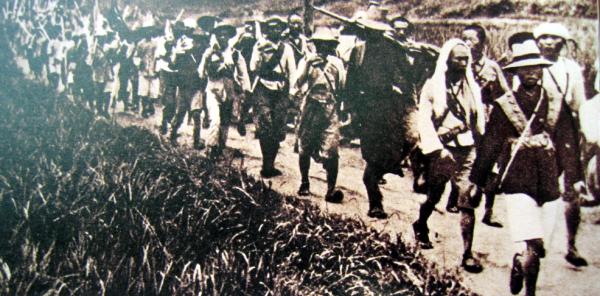
The Chinese Workers' and Peasants' Red Army in 1930. Public Domain
1927 – Fierce conflict broke out between reactionary forces and the Chinese Communist Party in China’s cities. The communist movement suffered bloody persecution and military setbacks. Mao led a force of about 1,000 people to the remote Jinggang Mountains, and for the first time established “Red” (communist-led) political power in China. Mao began developing a political and military strategy that could win liberation.
October 1934-October 1935 – The Red Army experienced severe defeats when following a wrong line. Mao then led a force of about 100,000 Red fighters and communist organizers on an astonishing 6,000-mile-long march, fighting numerous battles, and spreading revolution along the way. 10,000 people finished the Long March—but it enabled the revolution to go forward. Mao became chairman of the Communist Party at a conference during the Long March.
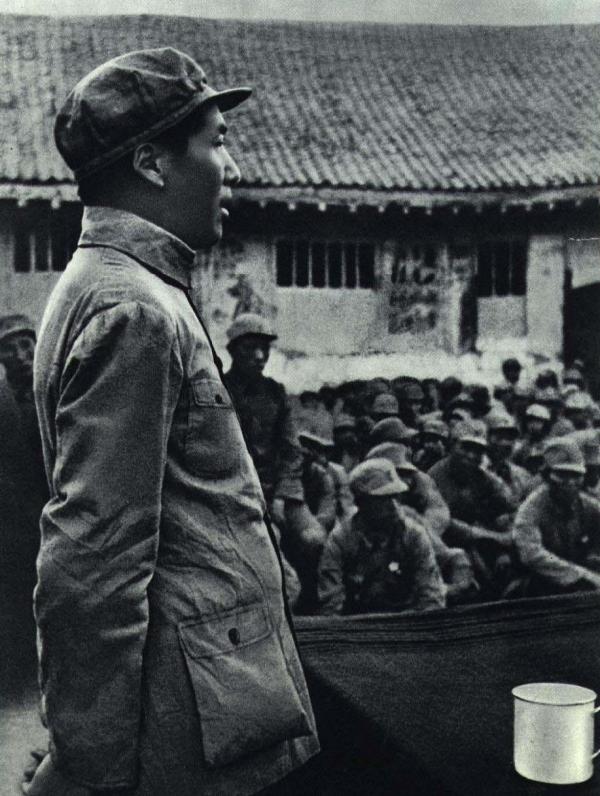
Mao Zedong in 1938 speaking at the Chinese People's Anti-Japanese Military and Political College. Public Domain
1937-1945 – Japanese imperialism launched a full-scale invasion of China in 1937. The Japanese army carried out brutal atrocities and plundered China’s resources. Millions of Chinese people, the vast majority of them civilians, were killed. Mao initiated and led a people’s war against this invasion as part of the overall fight for national and social liberation. In 1945, the Japanese forces were defeated.
1946-1949 – Civil war erupted between communist forces led by Mao, and the Guomindang – a reactionary army equipped and financed by U.S. imperialism. The revolutionary forces triumphed throughout the vast country in 1949.
Mao Zedong proclaiming the establishment of the People’s Republic of China, October 1, 1949.
October 1, 1949 – Mao declared the founding of the People’s Republic of China at a mass rally in Beijing. The revolution in power carried out massive land reform, launched health and literacy campaigns, began to forge a socialist economy, and propelled sweeping social change, especially aimed at breaking the chains of oppression of women.

People's commune, developed during Great Leap Forward, working collectively to harvest corn near Peking, China, January 1959. Photo: AP
1958 – Mao initiated the “Great Leap Forward.” It was a society-wide effort to mobilize masses of people to transform the countryside economically and socially. Rural “Peoples Communes” were the heart of the Great Leap Forward. They brought millions of people together in a new way, combining economic activity, political and social activity, militia formations, and administration—and in the process changing the relations among the people themselves.
1963 – Under Mao’s leadership, the Chinese Communist Party issued A Proposal Concerning the General Line of the International Communist Movement. It analyzes the persistence of classes and class struggle under socialism, and the ongoing struggle between the capitalist and the socialist roads in the transition to communism. It identifies revisionism—the abandonment of revolution in the guise of Marxism—as the main danger in this movement and lays the ideological basis for genuine communists to regroup and reject Soviet revisionism.

People gathering to discuss a "big-character poster." These posters were popular means of free expression, protest, and political messaging during the Cultural Revolution contributing to the atmosphere of broad debate over policy and direction of society.
1966 – Mao launched the Great Proletarian Cultural Revolution (GPCR). This was a new thing —continuing the revolution under socialism: aimed at overthrowing new bourgeois forces headquartered at the top levels of the Communist Party; radically transforming the political and social institutions of society; and further revolutionizing people’s thinking. Its main forms of struggle were mass political mobilization, mass criticism, and mass debate. The GPCR was the high point of the first stage of communist revolution in the 20th century.
1973-1976 – Mao’s last battle. In the early 1970s struggle between the socialist road and capitalist road intensified. Leaders fighting for the capitalist road mobilized people around a full-out program to discredit, attack, and reverse the Cultural Revolution—and maneuver to seize power and restore capitalism. Among the masses were people fighting to carry forward the GPCR, but also people tired of the years of struggle, and those who opposed it. Shortly after Mao died in September 1976, the capitalist roaders staged a military coup. They arrested Mao’s closest supporters in the top leadership and carried out massive repression and executions. Mao’s heroic last battle was over.