How do we revolutionary communists, based on the new communism, regard the approach of “mutual aid” that is a political trend among certain forces these days? The answer is that such “mutual aid” could, as a secondary dimension of things, contribute to building for an actual revolution, as the fundamental thing that is needed to deal with the outrages that masses of people are continually subjected to under this system. But, as a “thing unto itself,” this “mutual aid” has definite limitations—and as something posed as a substitute for, or in opposition to, the revolution that is needed, such “mutual aid” can only play a negative role.
Consider the magnitude of unnecessary suffering in this world. To cite one horrific fact, in the period since the end of World War 2 (in 1945) more than 500 million children have died from starvation and preventable disease, fundamentally because of the domination of the world by this system of capitalism-imperialism, with the U.S. as the number one capitalist-imperialist predator. This at the same time as the means—the technology and knowledge—exist that could make it possible for everyone on the earth to have their basic material needs met, free from want (and the fear of privation). The only reason this has not been brought about is, once again, because of the domination in the world by the system of capitalism-imperialism and the consequences of this for the masses of people in the world. Only through a profound revolution—sweeping away this system and converting the means of production (including technology) into the common property of society, administered for the common good, and utilizing this, together with the growing store of human knowledge, to meet people’s basic needs (materially, and culturally and intellectually as well)—only in this way can the basis be achieved for doing away with poverty and needless suffering, along with ending the brutally oppressive relations to which the masses of humanity are continually subjected.
As I emphasized in “Reform or Revolution: Questions of Orientation, Questions of Morality” (the Supplement to Chapter 1 in the book BAsics, from the talks and writings of Bob Avakian):
Now, when you come up against the great gulf that often, and even generally, exists between the conditions and the suffering of the masses of people, on the one hand, and what you are able to do about that at any given point—when you run up against that repeatedly, everyone feels a definite pull which expresses itself in moral terms: how can you stand by and not do something about what’s happening to the masses of people? As I have said a number of times, I have enormous respect for people who do things like volunteer for Doctors Without Borders. But the fact is that while they’re doing what they’re doing, and even with the good they do, this is being engulfed and overwhelmed by a tsunami of suffering (metaphorically speaking and sometimes literally) that’s brought forth by larger objective forces.
And, as I also emphasized:
In fundamental and strategic terms, it is necessary to choose where the weight and the essence of your efforts is going to go: into fighting the effects and the symptoms, or getting to the cause and uprooting and getting rid of that cause? And that’s why you become a revolutionary—when you realize that you have to seek the full solution to this, or else the suffering is going to continue, and get worse. That’s one of the main things that impels people toward revolution, even before they understand, scientifically, all the complexity of what revolution means and what it requires. And, as you become a communist and you increasingly look at the whole world, and not just the part of the world that you are immediately situated in, you see that the whole world has to change, that all oppression and exploitation has to be uprooted, everywhere, so that it can no longer exist anywhere. (Emphasis added here)
In connection with all this, I do feel the need to emphasize the following, in order to correct a distortion that I have seen put forward a number of times, on social media, in the comments of various people:
It is definitely not the case that, in its beginning and better days, the Black Panther Party was about “mutual aid”—it was about revolution.
I could say that I know this “because I was there.” It is a fact that, from its earliest days, from the time it was first known as the Black Panther Party for Self-Defense, I worked very closely with, and had many political discussions with, leaders and members of the Panther Party. But it is not just a matter of my “lived experience”—the actual history of the Panthers is there for anyone who cares to seriously, scientifically look into it. And revolution—however they, and I, understood it then—was definitely what the Panthers were about, from the beginning and for some time.
The most important activity of the early Panthers—and the thing that drew significant numbers of Black youth to them—were the armed patrols they carried out to counter brutality and murder by police. All this was done with revolutionary defiance, while also being in accordance with existing law. But this fairly quickly ran into a major obstacle: the authorities changed the law, to make it illegal to openly carry guns in the way the Panthers were doing it.
It was with the knowledge that the California Legislature was about to make this change in the law that the Panthers carried out their famous “armed protest” against this at the California State Capitol in Sacramento—but the law was passed anyway.
This effectively put an end to the Panthers’ armed patrols—even as Panthers in a number of cities were soon forced to carry out armed self-defense against massive armed attacks by police departments on Panther offices.
The “Breakfast for Children” programs that were later adopted by the Panthers were in effect a step back from the original revolutionary orientation of the Panthers—and, even as these programs served some basic needs of a certain number of people, these programs could not, of course, deal with anything like the full dimension of these basic needs (nor could any such program under this system).
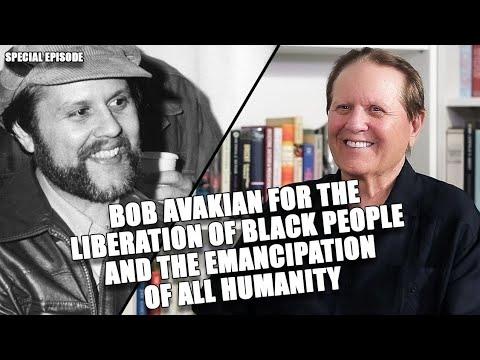
Finally, during the 1970s, the Panthers retreated entirely from any real revolutionary orientation. As summarized in Bob Avakian For The Liberation Of Black People And The Emancipation Of All Humanity (available at revcom.us as an article and a video):
By the beginning of the 1970s, millions of people in this country were in favor of some kind of revolutionary change, but they faced profound challenges. How could this revolution be made—or was it even possible to make a revolution here, up against such powerful forces of oppression and repression? Which were the key forces that had to be mobilized to have a real chance to carry out such a revolution? What kind of leadership was needed, and what methods and approaches should that leadership be based on? The difficulties in confronting and seeking the answers to these hard questions, combined with brutal and often murderous repression by the powers-that-be, led many revolutionary organizations, including the Black Panther Party, to split and end up departing from the road that could lead to real revolution.
At the same time, as indicated in what I have quoted here, the difficulty of actually forging a viable, winnable strategy for revolution was a serious, daunting challenge faced not just by the Panthers, but more broadly by people working for revolution in that time. As one dimension of this, as I wrote in Bob Avakian Responds To Mark Rudd: On The Lessons Of The 1960s And The Need For An Actual Revolution, those of us who were essentially seeking then to base our strategic approach on how the communist revolution in Russia had been carried out some 50 years earlier also ran into serious limitations and difficulties. Over the decades since the 1970s, in developing the scientific method and approach (and in particular the epistemology—the theory of knowledge) as well as the strategic orientation and approach of the new communism, I have continued to seriously grapple with the profound challenge of how the monstrosity of U.S. capitalism-imperialism could actually be brought down through a revolutionary struggle involving masses of people in the millions, with the leadership of an organized force based on the new communism. This is an ongoing challenge of great magnitude, with profound implications for the masses of humanity and ultimately humanity as a whole.
Yet nothing less than this revolution can create the basis for bringing about a positive resolution to the terrible conditions and the acute dangers and daunting challenges facing humanity, including the growing threat to the very existence of human civilization through the ongoing and accelerating destruction of the environment and the heightening danger of war between the U.S. and its rivals in Russia and China, all nuclear-armed capitalist-imperialist powers.
To repeat this critical point from “Reform or Revolution: Questions of Orientation, Questions of Morality”:
In fundamental and strategic terms, it is necessary to choose where the weight and the essence of your efforts is going to go: into fighting the effects and the symptoms, or getting to the cause and uprooting and getting rid of that cause? And that’s why you become a revolutionary—when you realize that you have to seek the full solution to this, or else the suffering is going to continue, and get worse. That’s one of the main things that impels people toward revolution, even before they understand, scientifically, all the complexity of what revolution means and what it requires. And, as you become a communist and you increasingly look at the whole world, and not just the part of the world that you are immediately situated in, you see that the whole world has to change, that all oppression and exploitation has to be uprooted, everywhere, so that it can no longer exist anywhere.