The HBO documentary The Janes is the story of a daring, underground group of women and collaborators who arranged for women to obtain abortions in the late 1960s and early ’70s in heavily Catholic Chicago, when abortion was illegal. It brings to light the physical and emotional trauma, suffering and death imposed on women when abortion was illegal, and how integrally banning abortion was bound up with the oppression of women.
The movie opens with Dorie Barron describing getting an abortion in pre-Roe America. “I had no other options. I wanted it over with, and I didn’t care how it was done, I was that desperate. An acquaintance said here’s a phone number. And it was the mob.” The mob charged $500 for a low budget abortion in a motel room. That was over $4,000 in today’s dollars, far out of reach of poor women, and it was the cheapest illegal abortion the mob offered.
Dorie Barron continues, “I went to the room I was assigned, I sat on the bed and waited.” A second woman showed up along with the people who performed the illegal abortions. They spoke three sentences to her the entire time: “Where’s the money?” “Lie back and do as I tell you.” And “Get in the bathroom.” The two young women were left in that room, in the middle of nowhere. Dorrie Barron was bleeding. “If I had stayed in that room,” she says, “I’d be dead.”
Dorie Barron became one of the women who helped organize “The Janes.” They were “ordinary” young women whose determination that women would not die from illegal abortions overcame their fear of arrest.
One woman who became an activist with the Janes describes the impact of a friend coming to her, telling her his sister was suicidal over the thought of being forced to bring her pregnancy to term. She started reaching out for resources. And once she entered into the world of trying to find an abortion, the enormity of the situation of women driven to illegal abortions hit her.
When abortion was illegal in Chicago, as in most of the country, the septic ward at Cook County Hospital was literally filled with women who had perforated their uterus, bladder, or intestines. One used acid to abort a fetus and came into the ward with horrific burns. Some 15 to 20 mostly very young women went into that ward every day. Every week one died.
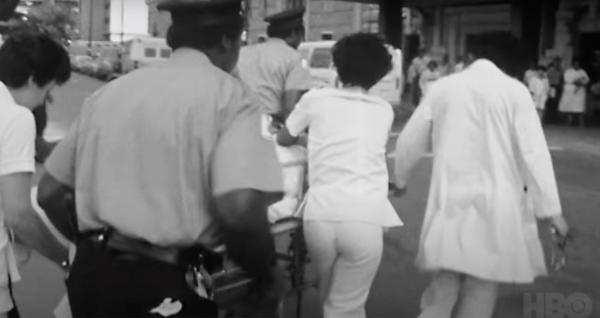
When abortion was illegal in Chicago, as in most of the country, the septic ward at Cook County Hospital was literally filled with women who had perforated their uterus, bladder, or intestines attempting self-induced abortions. Screengrab from the trailer for the HBO documentary "The Janes"
The Janes were audacious. They defiantly posted fliers up on phone poles: “Pregnant? Call this number and ask for ‘Jane’.” The messages from women were desperate. They said they already had too many kids. They were too young or too poor to have a child. They paid what they could, sometimes one dollar, sometimes four dollars. They were in early stages of pregnancy, and many months in. And they were from all walks of life.
Within the severe constraints of having to operate underground, to raise funds to cover expenses, the social climate created by abortion being illegal, and the risks involved, the Janes tried to make the process reassuring, non-judgmental, informed, and as safe as possible. In the documentary, a Black woman describes bringing a friend to get an abortion as a high school student at a location run by the Janes:
“I grew up right there at 2419 West Madison, across the street from the Black Panther headquarters, on the West Side. When I was about 14, one of my chums, she came to me and said that she was pregnant and that she couldn't have the child. I don't think I judged her, I just wanted to be able to help. Being so young, we probably didn't even really understand what an abortion was. She asked me, would I go with her, and I said yes. We cut school. And we took the bus. I recall going into an apartment. [There] was a lot of people. There was television going. Kids were there. It was like being in a doctor's waiting room, only it was more homey, you know, like... All I saw were white women running it, in charge. They described the whole procedure. We just... We lost it. We cried. Two little girls, we cried. She decided that she was gonna do it. So, I waited. They gave me this book, Our Bodies, Ourselves. I guess that's where I got my sex education from ’cause I did read that book from beginning to... Yeah. They had called a taxi. We went on home. I can't say she was ashamed of it, but I don't think we ever discussed the fact that that happened.”
The Personal Was Political
The Janes came together in the tumultuous storms of the late 1960s. It was a time of massive economic, social, and political upheaval and struggle. In the documentary, one of them, capturing the spirit of the times, says she “thought the whole world was going to change.”
The Janes were inspired by and connected with the liberation movements of the time, including the civil rights movement, the anti-war movement, the Black Panther Party, and their work was framed by the women’s liberation movement. In the documentary, they talk how about the women’s liberation movement had to go up against the Catholic Church and an overtly and viciously male chauvinist society—even birth control pills were largely inaccessible to unmarried women! And, going up against real weaknesses, what one referred to as “macho stuff,” in the radical and revolutionary movements.1
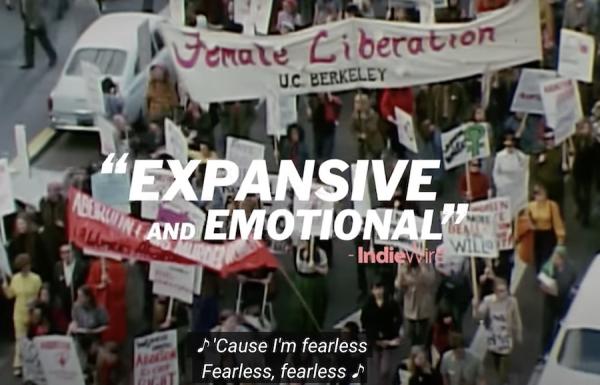
A scene from "The Janes," a women's liberation protest in the late 1960s, including the demand for legal abortion.
One of the Janes had been part of Mississippi Freedom Summer. When she came back to her college campus, she had the experience of bringing a friend who had been raped to the school infirmary, where her friend was subjected to a lecture on “promiscuity.” She says, “I went to Mississippi to support the voter registration effort. And during that summer, I learned that sometimes you have to stand up to illegitimate authority. And sometimes there are unjust laws that need to be challenged.”
Marie Leaner, a Black woman who was a member of the Janes, was a friend of Black Panther leaders Fred Hampton (who was assassinated by the Chicago Police Department in December 1969) and Bobby Rush. In the documentary she says, “I knew the risk I was taking” working with the Janes. As did the others. But they were driven and inspired by the needs of women, and the mass upheaval of the time.
The work of the Janes was in the context of and interwoven with the demand for legalizing abortion. They made it possible for 11,000 women to obtain illegal abortions under the safest conditions possible. But in the documentary, you get a sense of the limitations of the level of care and support the Janes could provide under the conditions of illegality. One says, that of the “endless line of suffering people needing help” what the Janes were able to accomplish was just “a drop in the bucket.”
The documentary shows footage of a rally with women demanding “repeal all anti-abortion laws… repeal restrictive contraceptive laws… end forced sterilization. The things that happen to women under the existing system are so bad, and so criminal, that we simply have to get rid of these laws.”
In response to mass upheaval in society, and these demands, the rulers of this country made concessions to movements against oppression. Voting rights and civil rights laws were enacted (those laws, like the right to abortion, have been largely eviscerated now or hang by a thread). Some states began to allow abortions in some circumstances.
In 1970, three years before the U.S. Supreme Court legalized abortion in the ruling Roe v. Wade, abortions became legal in New York State. But the documentary makes clear that a trip to New York for an abortion was completely inaccessible to poor and Black women in Chicago. The cost, logistics, and social contradictions involved in getting to New York continued to condemn them to underground and illegal abortions.
The Janes were targeted by the Chicago PD’s “Red Squad,” a special division of the Chicago Police Department responsible for terrorizing, brutalizing, and concocting criminal charges against radicals, and revolutionaries. The last part of the The Janes documents the arrest of eleven of the Janes in a raid on a location they were using for abortions by detectives in the Chicago Police Homicide Division. These women faced over a hundred years in jail each if convicted. The Roe v. Wade decision that overturned state laws criminalizing abortion came before their actual trial began.
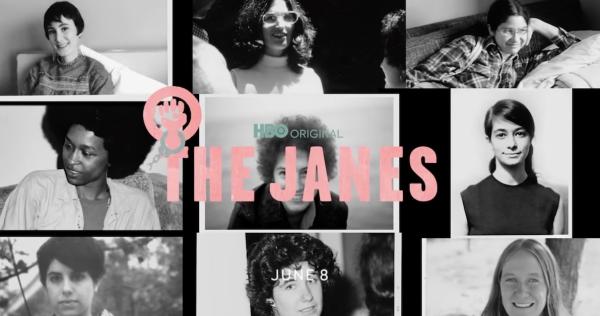
Some of The Janes. Screengrab from the trailer for the HBO documentary "The Janes"
Most of all, what comes across in The Janes is the systemic and unbearable physical and emotional brutality and oppression of women that was enforced by and a product of abortion being illegal. And the courage and determination of those who fought to make a safe abortion available to any woman who chose to have one.
The Janes was directed by Oscar nominee Tia Lessin (HBO’s Trouble the Water) and Emmy-nominee Emma Pildes (HBO’s Jane Fonda in Five Acts). It is available on-demand on HBOMAX.