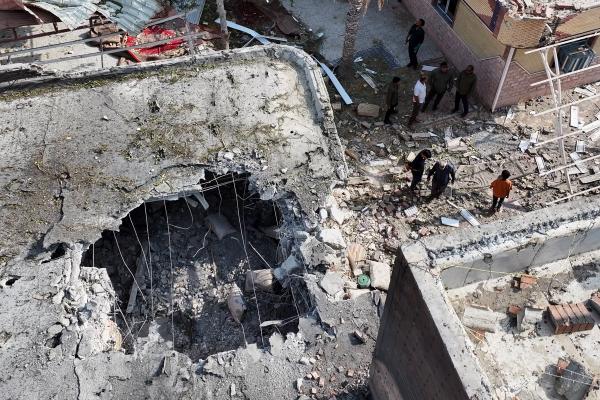
Iran building bombed by the U.S. during a wedding celebration, killing 5 and wounding 70, August 30, 2026. Photo: AP
It has now been seven months since the U.S. and Israel launched their unjust and bloody sneak-attack war against Iran, at the very moment the U.S. pretended to be negotiating “in good faith” with that country. This past week saw the most intense flare-up of combat between the U.S. and Iran in nearly a month. Both sides continue to battle and maneuver for control of the globally strategic Strait of Hormuz, yet the war remains a stalemate.
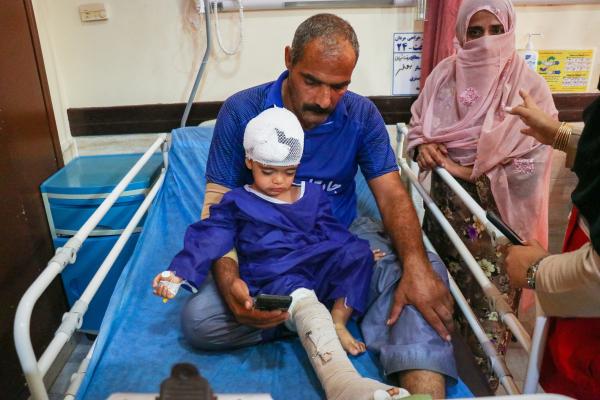
Child wounded in a strike by U.S. on a home where a wedding was being held in southern Iran, August 30, 2026. Photo: AP
The U.S. carried out dozens of attacks on Iranian facilities, ships, and tankers. One U.S. strike hit a wedding party in southern Iran. The strike killed five people, including a six-year-old boy, and wounded nearly 70 others.
Iran targeted U.S. bases and other facilities in Kuwait, Bahrain, Jordan, and Iraq, and according to the U.S. military, some major U.S. warships.
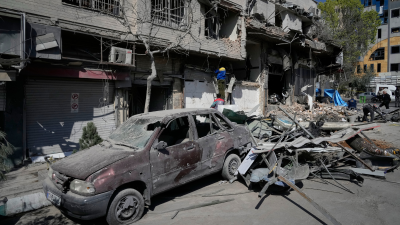
All this came on top of the toll that the U.S.-Israeli war has already taken. At least 3,468 Iranians have been killed by the U.S. and Israel, including seven infants and at least 376 older children. The U.S. has cruelly destroyed homes, schools, hospitals, bridges, factories and much more, and driven at least two million Iranians from their homes.
Meanwhile, the ongoing U.S. naval blockade and sanctions have cut Iran’s foreign trade by a third. This has sent inflation sky-high and seriously intensified the suffering of ordinary Iranians. (The price of vegetable oil has risen 383% compared with a year ago, eggs by 294%, and chicken by 177%.)1
Trump: From “Small Potatoes” to Threatening Annihilation
As the Iran war entered its seventh month and this outbreak of fighting raged, Vice President Vance told a reporter, “I wouldn’t call this a war.” Trump said he agreed. He calls it a “military conflict because it’s small potatoes for us. It’s not a big thing.”
Yet, just a few days earlier Trump had issued a depraved, genocidal threat on social media: “If the failed Nation of Iran retaliates for this very justified [U.S. attack on Iran], they will be hit again at a much harder and higher level, but it will not be the biggest attack of them all, that is waiting in the wings and, when it is over, there will be very little left of the Islamic Republic of Iran!”
This seeming inconsistency and even incoherence reflects the difficult position that U.S. imperialism finds itself in. To understand this, it is worth returning to what we wrote on July 27, 2026, in talking about the options the regime faces, as they are reported to see them from multiple sources. These options are:
1. Declaring victory and getting out. This means Trump and the U.S. essentially giving up on the objectives they set out to achieve in starting the war: eliminating Iran’s nuclear capacity and changing the Iranian regime to one favorable to the U.S. This could mean settling on the terms of an agreement both Trump and the Iranian regime signed in June that cedes ground to Iran. Among other things, that agreement granted Iran significant say in controlling traffic through the Strait of Hormuz. Iran didn’t have this before the war, and obtaining it now would be a sign of weakness for the U.S.—representing an extremely significant, strategic defeat.
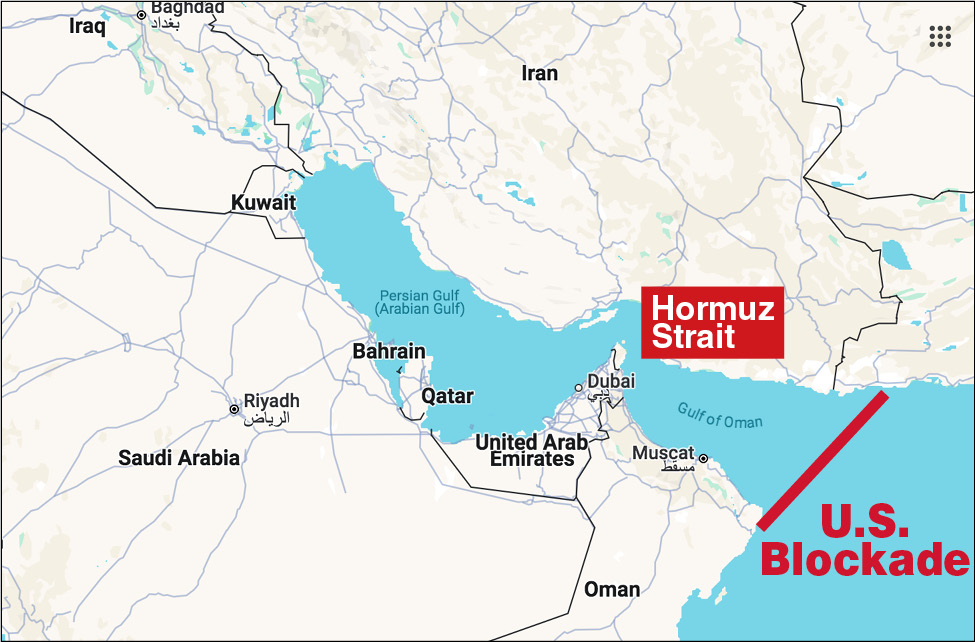
U.S. blockade of the Strait of Hormuz [Click to expand.] Map: Google, Data source: DOW, Labels: Revcom
2. Economic blockade. The U.S. is continuing its naval blockade of Iranian ports (which is an act of war) and has imposed new sanctions on Iran. It is coupling this with guiding some ships through the Strait of Hormuz, as well as employing military force to degrade Iran's ability to exert control of the strait. The Trump regime apparently hopes this will enable the U.S. to intensify pressure on Iran without having to return to all-out war, while easing pressure on oil markets and the world economy.
Yet so far this has not had a decisive effect on the war, and the situation in the Strait of Hormuz remains, as the New York Times reports, “A Lethal Stalemate.” The longer the current no-war-no-peace stalemate goes on, the longer will the world economy, including the U.S., continue to struggle—especially as other intensifying stresses and potential sources of crises continue to occur. Meanwhile strains on the U.S. military will increase, all this with no clear resolution in sight.
U.S. strikes three Iranian oil tankers, September 5, 2026.
3. Military escalation. The U.S. could opt to radically escalate and go for a decisive victory, but that would likely require invading with ground troops. Such an invasion would have no guarantee of success. But it would carry the strong possibility of suffering significant losses and even the possibility of outright defeat, along with massive damage to U.S. allies in the region from Iranian retaliation. Plus they would be going into this with very little public support in the U.S. now.
Members of Trump’s war council (which includes Vance, Secretary of State Rubio, Secretary of “War” Hegseth, and other top Trump officials) are also worried that each of these options could widen the war across the Middle East, further alienate and harm key U.S. Gulf allies like Saudi Arabia, create serious energy shortages, do even more damage to the world economy, and even trigger massive refugee crises as fuel shortages impact food production in Africa and Asia. They were also concerned that a major escalation of the war could “dangerously drain the Pentagon’s already diminished stockpile of Patriot antimissile interceptors and other air defense munitions in the Middle East,” according to the New York Times. Finally—and this is important—depleting weaponry would also leave the U.S. less prepared for any confrontation with their imperialist rivals in China and Russia. And we’re not here getting into the even greater horrific death and destruction that this would visit on millions of Iranians, who are already suffering terribly.2
Each of these options poses great risks for the U.S. rulers and the potential for seriously damaging their strategic dominance and even fundamental interests.
The Democrats—NOT to the Rescue
A month after this assessment, and seven months into the war, the Trump fascist regime has still not developed a viable way out, and in the low-intensity—but very high-stakes—phase of the war now playing out, any miscalculation could set off extremely dangerous consequences, with things spinning out of anyone’s control.
In such a situation, people in this country have been trained to look to the “opposition party” for help, and right now a lot of people who oppose Trump are caught up in the coming midterm elections. But if you are looking to the Democratic Party leaders to stop the war against Iran, think again: You are looking to people who share Trump’s basic assumptions.
The Democrats—a capitalist-imperialist ruling class party with its own long record of unjust and murderous wars—face the same necessity to advance and not undermine the U.S.’s imperialist position in the world. Bob Avakian presciently analyzed in Bringing Forward Another Way, nearly two decades ago, that an Iran with even one or two nuclear weapons—or even with the perceived capacity to quickly develop one—would alter the balance of power in the Middle East and create real problems for the U.S.
In the years since that work was written, China has fully emerged as a powerful economic, diplomatic and military rival to the U.S…. and an ally of Iran. To the top-dog imperialist powers, the people of the world are so many pawns on the chessboard of world domination. And within this country, that is true of both political parties—even as they might have sharp differences over how to fight that battle.
That’s why today, even those Democratic politicians who raise criticisms of Trump’s war do so on the grounds that it’s not the way to hamstring Iran and secure larger U.S. interests. As a party, they may object to this or that aspect of how the war is being fought but at this point they do not oppose the war itself.3
This was captured by Democratic Senator Gary Peters shouting at U.S. Defense Secretary Pete Hegseth and Joint Chiefs of Staff Chairman Dan Caine, “You don’t have a long-term plan to actually win this war. Win the war!”
The Tight Spot the U.S. Finds Itself in and the Grave Danger of Escalation
Click to expand
The tight spot the Trump regime and the U.S. imperialists find themselves in now, increases the pressure to do something dramatic and dangerous in order to break out of it… even as that something dramatic carries huge risks for their position in the world and the stability of their rule.
And here is a little-known fact: In the period between the November 2020 electoral victory by Joe Biden and the attempted MAGA/fascist coup on January 6, top military and political officials—including Speaker of the House Nancy Pelosi and Chairman of the Joint Chiefs of Staff Mark Milley—took extraordinary steps to prevent Trump from possibly attacking Iran or ordering a nuclear strike in what would have been a desperate attempt to remain in power. The implication is clear: These powerful ruling class players worried that Trump would plunge the world into an emergency situation by attacking Iran as part of his desperate bid to maintain power.4
To be clear, despite a recent assertion from the fascist Tucker Carlson, there is no credible evidence at this point that the Trump regime is contemplating the use of nuclear weapons as a live option. But it would be unwise not to take this history seriously in considering what this fascist regime might do. After all, this is a regime which does not consider itself constrained by existing bourgeois-democratic and international norms, but rather intentionally violates and smashes those norms.
This is a real, ongoing danger people must remain alert to. This is an explosive situation that at any time could erupt onto a whole other level. This drives home the need for actual protest and struggle against the war. And more than that, it drives home the very strategic and very immediate importance of what Bob Avakian has said:
We can no longer afford to allow these imperialists to dominate the world and to determine the destiny of humanity. They need to be overthrown as quickly as possible. And it is a scientific fact that humanity does not have to live this way.