Update, August 3: For the past week reports have circulated that the U.S. and perhaps Israel were planning to launch what CBS News called “one of the harshest bombing campaigns to date against energy infrastructure targets in Iran,” perhaps as soon as this past weekend. Then on Saturday night, August 1, Trump posted that U.S. allies in the Middle East had reached the outlines of a deal to end the war, so he was cancelling planned strikes on Iran for now. So far, Iran has not commented on Trump's announcement.
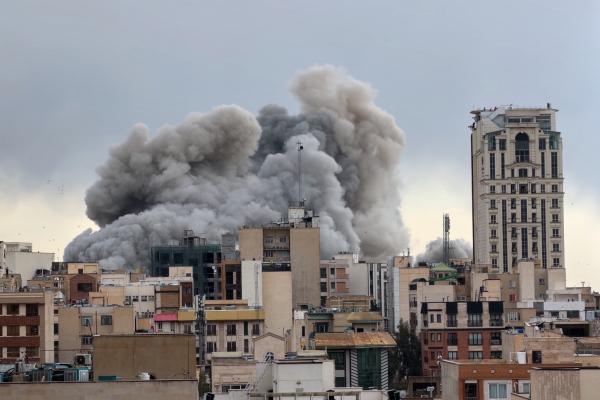
Let’s be clear: the attacks Trump was threatening would have been monstrous U.S. and Israeli war crimes. This is on top of all the other war crimes they’ve committed in this illegal and monstrous war. Over 4,000 children, across six different countries in the region, have already been killed or injured, according to a statement by UNICEF. In Iran, some 386 children have been killed and 2,117 injured. This past week, the U.S. dropped a 2,000 pound bomb on a home on Iran’s Qeshm Island killing a husband and wife and their 2-year-old son. Their home was in a densely populated neighborhood, and there are no military sites in the area.
This is the second time in the past two weeks Trump has pulled back from threats to seriously escalate the war. Yet the situation remains extremely dangerous, volatile, and unpredictable. The U.S. could again reverse course and resume its attacks on Iran.
Any escalation by the U.S. and Israel could fuel the spread of the war across the Middle East and potentially beyond. Signs of the war’s spread were already evident last week, including:
Saudi Arabia acknowledged direct involvement in the war for the first time after conducting joint strikes with U.S. forces on Iranian-backed militias in Iraq, which had earlier hit targets in Saudi Arabia.
In response to attacks on Saudi ships and oil facilities by Yemen’s Houthis, the Saudis announced the formation of a military coalition to protect shipping.
Egypt was hit for the first time when an unidentified drone ignited fires on two ships in the port of Damietta near the Suez Canal, an implicit threat to shipping in the Red Sea.
On July 25, Ukraine struck an Iranian cargo ship in the Caspian Sea, claiming it was carrying arms to Russia.
So far there’s been no further conflict between Ukraine and Iran, but the incident raised the specter of the Russia-Ukraine war becoming intertwined with the U.S.-Israeli war on Iran. If this escalates, there is the heightened danger of direct military confrontation between the United States and Russia, both nuclear armed powers.
So far at least 14 nations have become involved in the Iran war in one way or another.
**********
July 27, 2026: The war Trump and the U.S. imperialists are desperately trying to find “good options” for winning is a totally unjust war of imperialist aggression.
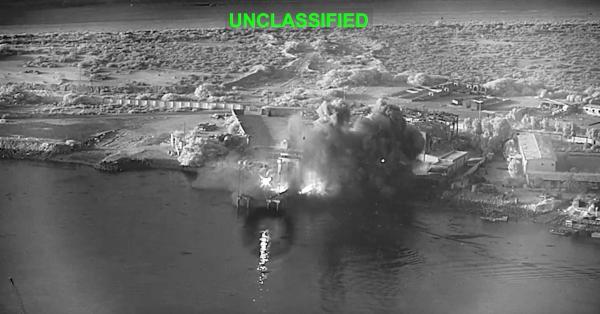
An explosion from three U.S. one-way attack surface drones, at Bandar Abbas Naval Base, Iran, July 12, 2026.
“I am considering a massive attack. Bigger than ever before. I am close to making a decision. We are all set for it," Trump told Axios.com on July 23.
The next day he met with his Friday night “war council.” Afterward, Trump set aside his plans for a “massive attack,” but did not announce a new course of action.
The U.S. has halted its daily bombardments for now. Iran said it would do likewise as long as the U.S. did.
Trump and his regime are already spinning this decision to make it look like the U.S. is acting reasonably since there are lower level “talks” continuing. Reasonable in gangster terms—with Trump saying the U.S. “is locked and loaded” and ready to “[knock] out everything they have."
This is not mere political theater. The Trump regime is confronting the reality that it has created very dangerous new necessity—serious problems in which all of their options could bring major setbacks or worse.
Strategic Risks for U.S. Imperialism
Trump and his fascist team discussed three options: “military escalation, economic crackdown or declaring victory and getting out.” They reportedly didn’t like any of them.
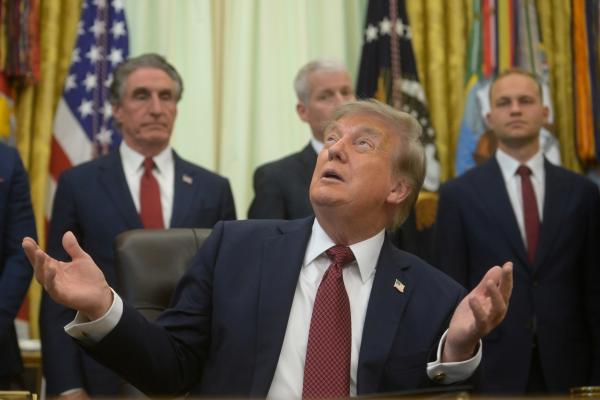
1. Declaring victory and getting out. This means Trump and the U.S. essentially giving up on the objectives they set out to achieve in starting the war: eliminating Iran’s nuclear capacity and changing the Iranian regime to one favorable to the U.S. This could mean settling on the terms of an agreement both Trump and Iranian regime signed in June which cedes ground to Iran. Among other things, it grants Iran significant say in controlling traffic through the Strait of Hormuz. Iran didn’t have this before the war, and obtaining it now would be a signboard of weakness—representing an extremely significant, strategic defeat for the U.S.
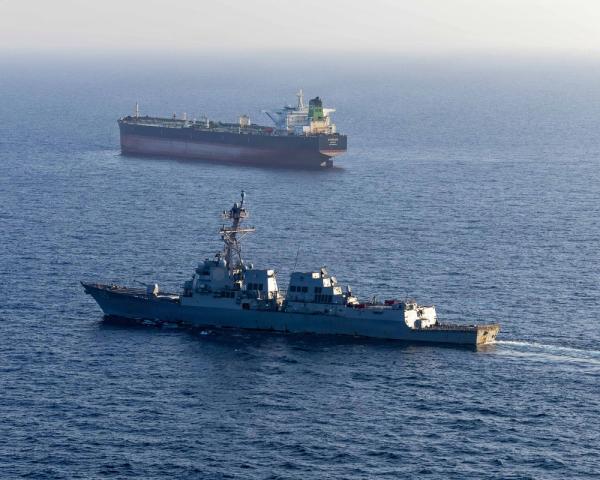
USS Rafael Peralta blockades and prevents passage of Iranian-flagged ship. Photo: USNavy
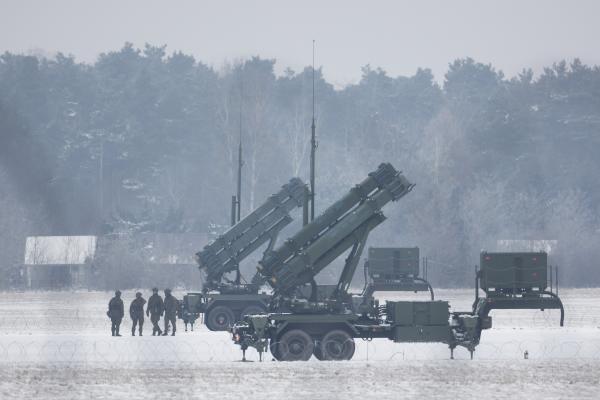
Escalation of the war could drain the U.S.'s already diminished stockpile of Patriot antimissile interceptors. Seen here in Warsaw, Poland, February 6, 2023. Photo: AP
2. Economic blockade. The U.S. is already doing this with little visible affect, and the longer the current no-war-no-peace stalemate goes on, the deeper the damage to the world economy and millions and millions of people, with no clear resolution in sight. (See box.)
3. Military escalation. The U.S. could opt to radically escalate and go for a decisive victory, but that would likely require invading with ground troops. Such an invasion would have no guarantee of success, but would carry the strong possibility of suffering significant losses and the real possibility of outright defeat, along with massive damage to U.S. allies in the region from Iranian retaliation, and with very little public support in the U.S. now. Trump and his advisors were very concerned that a major escalation of the war could “dangerously drain the Pentagon’s already diminished stockpile of Patriot antimissile interceptors and other air defense munitions in the Middle East,” according to the New York Times. Finally—and this is important—depleting weaponry would also leave the U.S. less prepared for any confrontation with their imperialist rivals in China and Russia. And we’re not here getting into the even greater horrific death and destruction that this would visit on millions of Iranians, who are already suffering terribly.1
* * * * * * * * * *
Trump’s war council worried that each of these options could widen the war across the Middle East, further alienate and harm key U.S. Gulf allies like Saudi Arabia, create serious energy shortages, do even more damage to the world economy, and even trigger massive refugee crises as fuel shortages impact food production in Africa and Asia.
At the same time mainstream media and military analysts warn that escalating the current cycle of attacks and counterattacks risks a wider war that neither the U.S. nor Iran may be able to contain.2
Each of these options poses great risks for the U.S. rulers and the potential for seriously damaging their strategic dominance and even fundamental interests.
A Criminal War of Unprovoked Aggression—Then AND Now!
Let’s be clear: the war Trump and the U.S. imperialists are desperately trying to find “good options” for winning is a totally unjust war of imperialist aggression.
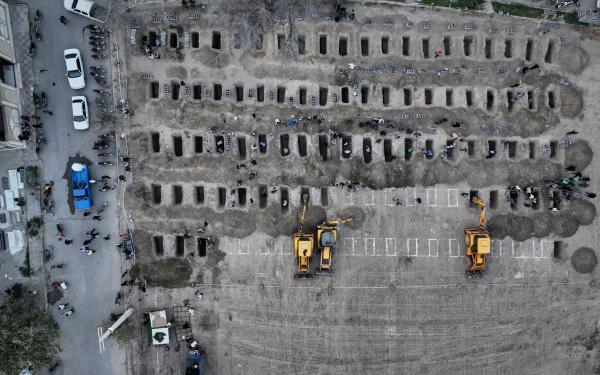
Graves for the victims, mostly children, of a U.S. attack on a girls' elementary school in Minab, Iran, February 28, 2026. Photo: AP
Five months ago, on February 28, the U.S. and Israel launched an unprovoked war of imperialist aggression on Iran, a country which has never had nuclear weapons and posed no immediate threat to either of them. This makes the U.S.-Israeli attack a criminal act under international law—a war crime.
Everything the U.S. has done since then—the threats, the attacks, the blockades, the maiming and killing, and the suffering inflicted on millions worldwide—is a continuation and result of that criminal imperialist war for control of the Middle East and the world.
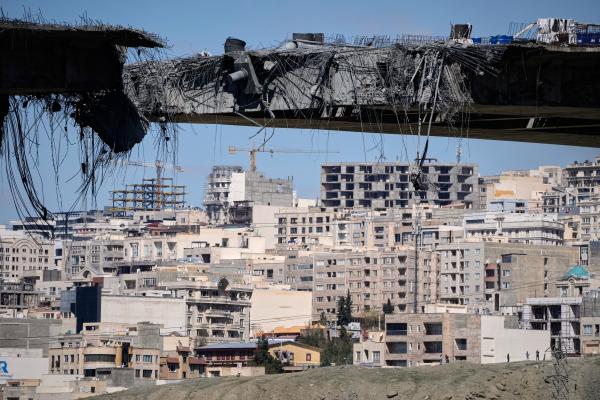
They’ve done horrific things. From February 28 until a ceasefire went into effect on April 8, U.S. and Israeli bombs and missiles hit Iran a staggering 23,000 times. Since then the U.S. has carried out further bomb and missile attacks including some 300 in one three-day period this month. These have struck military and civilian targets—including bridges, hospitals, homes, schools, businesses and more. At least 3,468 Iranians, including seven infants and at least 376 older children, have been killed and at least two million displaced from their homes.
When the U.S. imperialists are talking about options, they’re talking about options to attempt to crush and dominate a country of 93 million people. Trump even spelled this out this past week, threatening to systematically destroy Iran’s power plants, bridges and other civilian infrastructure, including in Iran’s capital Tehran; attacking nuclear facilities; possibly seizing key oil shipping facilities.
A Situation in Flux…With Heightened Dangers
After five months of war, the Trump fascist regime has not developed a viable way out of its Iran war. And the Democrats—as an imperialist ruling class party—now face the same necessity to advance and not undermine the U.S.’s imperialist position in the world. Even those Democratic politicians who are critical offer hollow words and petty amendments.
The cul-de-sac they find themselves in now increases the pressure to do something dramatic and dangerous to break out of it…even as that something dramatic carries huge risks for their position in the world and the stability of their rule. This is a real, ongoing danger people must remain alert to.
The fact that the U.S. has no good “options” in Iran doesn’t just reflect a Trump strategic blunder; at a deeper level it concentrates the reality that this system is driven to commit unending devastation and destruction to maintain its position in the world. The whole situation bound up with the U.S. war on Iran could possibly spin into a major political crisis at a time when the U.S. ruling class and the key institutions of the state are irreconcilably divided. In moments like this, the possibility for an actual revolution could arise if there is a vanguard force of thousands with the ideological, political and organizational capacity to lead millions who rise up determined to fight for a radically new and a fundamentally different system.
We can no longer afford to allow these imperialists to dominate the world and to determine the destiny of humanity. They need to be overthrown as quickly as possible.
Bob Avakian
U.S.-Israel War: Worsening Hunger—In Iran, for Hundreds of Millions Worldwide

Smoke rises from a U.S.-Israeli strike on an oil factory in Tehran, Iran, March 8, 2026.
In Iran. The U.S.-Israeli war has intensified the suffering and agony of Iran’s 93 million people. “Across the sanctions-hit country, people face a mounting list of challenges as they struggle to get by,” Al Jazeera reports, “from collapsing purchasing power and unaffordable food, rent and medicine to lost jobs, unreliable internet, electricity cuts, banking disruptions and destroyed infrastructure.”
Two small but telling examples: An unemployed musician in Tehran said that when friends and relatives talk, “The first question we ask one another is: Have you eaten?” Other Iranians report abandoning fruits and vegetables “in favor of vitamins to save money.”
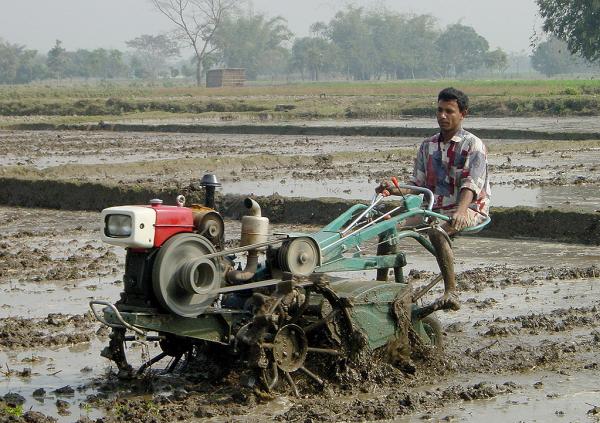
Plowing soil for rice transplanting in Bangladesh. Photo: SEJustice
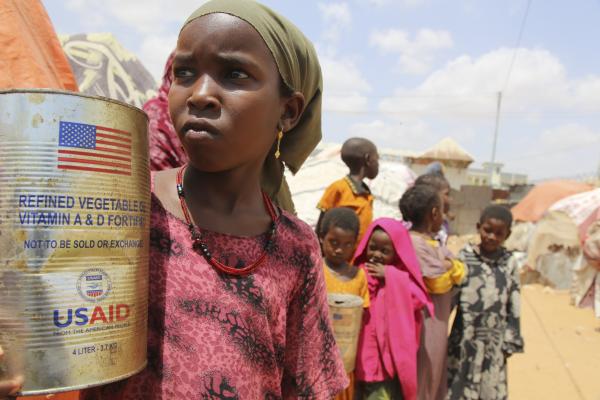
Somali internally-displaced persons in camp on the outskirts of Mogadishu, Somalia, February 5, 2026. Photo: AP/Farah Abdi Warsameh
Worldwide. The U.S. blockade of Iran’s ports and Iran’s closure of the Strait of Hormuz—a direct result of the U.S.-Israel war on Iran—has sent shockwaves through the global capitalist-imperialist economy and world food supplies.
To take one stark example, the closure has “limited the shipment of diesel, depriving farmers of fuel for irrigation pumps and threatening the food supply,” the New York Times reports. “Growing food for hundreds of millions of people depends on diesel” in countries from Bangladesh, Vietnam and Indonesia to Myanmar, Nigeria and Ethiopia.
In Bangladesh, a country of 178 million, some 15 million small farmers each till an average of three acres to produce the country’s main staple crop—rice. Now, as a direct result of U.S.-Israeli aggression against Iran, the rising price of diesel will seriously cut into their production and worsen hunger in this country where over 46 million people already lack regular access to safe, sufficient, and nutritious food.
Stop and think of all needless depravation and suffering packed into that one fact…and the blood dripping from U.S. and Israeli hands!
See also:
-
The Escalating Combat Between the U.S. and Iran, the Danger of More Catastrophic War, and the Outmoded System Driving This Madness and Threatening Humanity
-
The U.S.-Iran Ceasefire Negotiations: Highly Fraught And Potentially Explosive
IN THIS MOMENT, MORE THAN EVER, WE NEED TO FORGE A WAY FORWARD OUT OF THE MADNESS
-
U.S. and Israel vs. Iran: Unjust War, Unjust Negotiations, and How the U.S. Media Trains You to See Things Upside Down